
Car Loan Interest Rates in the Philippines: A Complete Guide
Key Takeaway
- Car loan interest rates may use different calculation methods. Compare the disclosed effective interest rate (EIR), applicable fees, and total repayment amount, rather than relying on the advertised rate alone.
- Vehicle age, down payment, repayment term, and lender assessment may affect the financing offer you receive.
- Before choosing a car loan, compare monthly payments, fees, insurance, total payable amounts, and repayment conditions.
Two lenders may offer different car loan interest rates, but a lower advertised rate does not always mean a lower borrowing cost. The amount you repay depends on more than the quoted rate. Your loan term, additional fees, and payment schedule can all affect the total cost of financing.
Before choosing a lender, take time to understand how car loan interest rates work in the Philippines and what each financing offer includes. Learn how interest is calculated, and compare add-on rates, effective interest rates (EIR), applicable fees, and repayment terms before applying. Understanding these details can help you compare your options and find financing that suits your budget.

How Do Car Loan Interest Rates Work in the Philippines?
When you finance a vehicle, car loan interest is the cost of borrowing money from a lender. How much you pay depends on the lender’s interest calculation method and the terms of your loan agreement.
To understand the actual cost of financing, consider these four factors:
- Amount Financed: The money you borrow to purchase a vehicle.
- Interest Charges: The cost of borrowing, calculated based on the agreed interest method.
- Monthly Payment: The amount you pay each month, which may include principal, interest, and applicable charges.
- Total Repayment: The overall amount you pay throughout the loan term, including interest and applicable fees.
What Does a Car Loan Interest Rate Mean?
A car loan interest rate helps determine how much interest you pay on the money you borrow. Lenders may calculate interest using different methods, such as add-on or reducing-balance interest. The effective interest rate (EIR) helps show the overall borrowing cost based on the loan’s cash flows and applicable finance charges.
Before applying, ask your lender how interest is calculated and how much you will repay in total, not just the advertised rate.
Why Do Lenders Quote Different Car Financing Rates?
Not all lenders calculate or offer car financing rates the same way. Your financing terms may vary depending on several factors:
- Lender Policies: Each lender has its own pricing guidelines and assessment process.
- Financing Product: Different loan products may have different terms and cost structures.
- Borrower Assessment: Your income, financial capacity, and credit history may influence the offer.
- Vehicle Details: The vehicle’s type, age, condition, and appraised value may affect financing terms.
- Repayment Terms: The loan duration and payment schedule can influence your monthly payments and total borrowing cost.
A lower advertised interest rate does not always mean a lower total cost. Compare the full repayment amount, fees, and loan conditions before choosing a financing option.
Monthly Add-On Rate vs Effective Interest Rate: What’s the Difference?
When comparing car loan interest rates in the Philippines, you may come across two terms: monthly add-on rate and effective interest rate (EIR). Both describe borrowing costs, but they use different calculation methods.
A monthly add-on rate typically calculates interest using the original loan amount, while EIR considers the actual payment schedule, loan cash flows, and applicable financing charges.
You cannot directly compare a monthly add-on rate with an effective annual rate. Understanding how each works can help you compare loan offers more accurately.
What Is a Monthly Add-On Interest Rate?
A monthly add-on interest rate typically calculates interest based on the original amount financed throughout the loan term, even as you make payments.
This means the interest calculation generally uses the starting principal rather than the remaining balance.
Before accepting an offer, ask for the total interest charges and monthly repayment amount to understand what the quoted rate means for your budget.
What Is an Effective Annual Interest Rate (EIR)?
The effective annual interest rate (EIR) shows the cost of borrowing as an annualized rate, taking into account the loan’s cash flows, repayment timing, and applicable finance charges.
According to the Bangko Sentral ng Pilipinas (BSP), EIR is calculated using the estimated cash flows over the loan term and the net loan proceeds. This helps borrowers compare financing offers using a more consistent measure of borrowing costs.
When comparing lenders, ask for the disclosed EIR and a breakdown of all applicable charges, rather than relying on the advertised interest rate alone.
What Is Diminishing Balance Interest?
Diminishing balance interest, also called reducing-balance interest, calculates interest based on the remaining unpaid principal, following the terms of your loan agreement.
As you repay the principal, the balance used to calculate interest decreases. However, your actual payments still depend on the agreed rate, repayment schedule, and other contract terms.
Keep in mind that a reducing-balance interest rate is not automatically the same as the disclosed EIR, especially when additional financing charges apply.
Why the Quoted Rate May Not Tell the Full Story
An advertised interest rate is only one part of your car financing cost. Before signing a loan agreement, ask your lender for:
- Repayment Schedule: When payments are due and how much you need to pay.
- Effective Interest Rate (EIR): The disclosed borrowing cost based on the relevant loan cash flows.
- Financing Charges: Applicable processing fees and other charges associated with the loan.
- Total Payable Amount: The full amount you are expected to repay over the financing term.
The best way to compare car loan offers is to look beyond the quoted rate. Review the total repayment amount, fees, and payment terms to find financing that fits your budget.
What Factors Affect Car Loan Interest Rates?
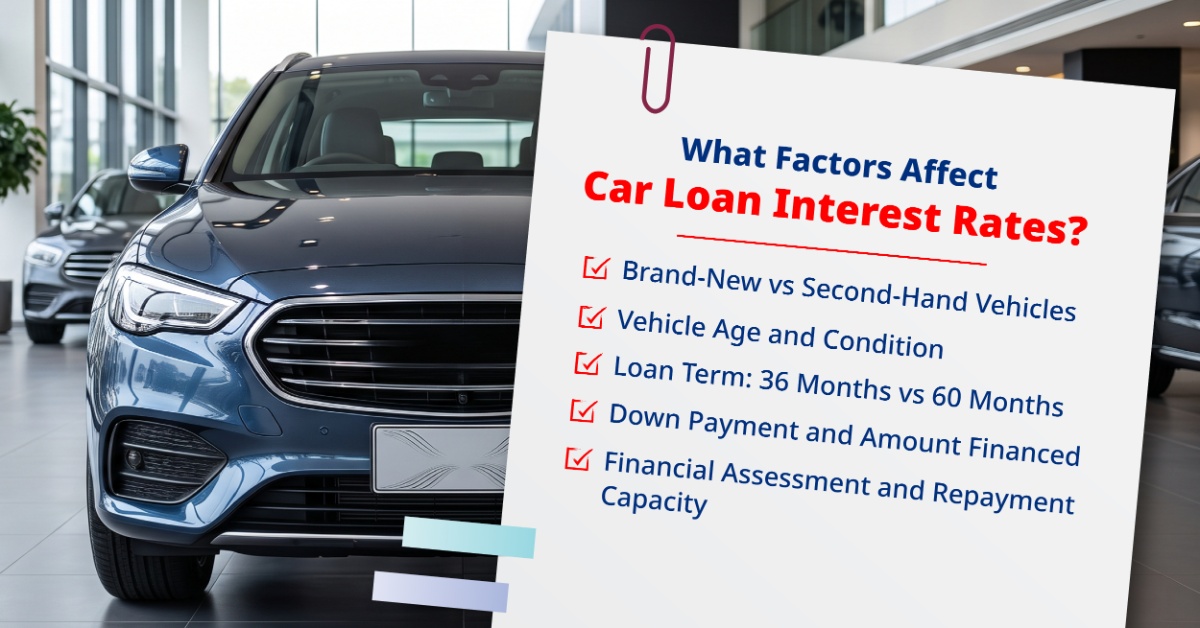
If you’re comparing the auto loan interest rate the Philippines offers, keep in mind that rates can vary depending on the vehicle, loan terms, and your financial situation. Each lender has its own assessment process, so understanding these factors can help you prepare before applying. Each lender has its own assessment process, so understanding these factors can help you prepare before applying.
Brand-New vs Second-Hand Vehicles
Financing a brand-new car may come with different terms than financing a second-hand vehicle. Lenders consider vehicle value, condition, age, and financing eligibility when reviewing applications.
Since pre-owned vehicles vary in age, condition, depreciation, and resale value, lenders may apply different eligibility requirements and financing terms.
Vehicle Age and Condition
A vehicle’s age and physical condition can affect its appraised value and eligibility for financing.
Lenders may assess the vehicle’s mileage, maintenance history, and overall condition to determine whether it meets their collateral requirements. Older vehicles may face additional restrictions depending on the lender’s policies.
Loan Term: 36 Months vs 60 Months
Your repayment period affects both your monthly budget and overall borrowing cost.
- 36-Month Term: Generally means higher monthly payments but potentially lower total interest costs.
- 60-Month Term: May reduce monthly payments but can increase total interest costs over time.
Under otherwise comparable financing terms, a longer loan term may make monthly payments more manageable, but it can cost more overall.
Down Payment and Amount Financed
A larger down payment reduces the amount you need to borrow, which can lower your monthly payments and total interest charges under the same loan terms.
However, a larger down payment does not automatically mean a lower interest rate. Your actual financing offer still depends on the lender’s assessment and applicable conditions.
Financial Assessment and Repayment Capacity
Lenders also review your ability to manage regular loan payments. Common assessment factors include:
- Income: Your earnings and their consistency.
- Existing Financial Obligations: Current loans, bills, and other repayment commitments.
- Credit Assessment: Your borrowing and repayment history, where available.
- Affordability: Whether the proposed monthly payment fits your financial situation.
Before applying, review your monthly budget and existing expenses. Choosing a repayment amount you can manage is just as important as comparing interest rates.
Car Loan Cost Comparison: 36 Months vs 60 Months
Choosing between a 36-month and 60-month car loan isn’t just about finding a lower monthly payment. Your repayment term can also affect the total interest charges and overall cost of financing.
A longer loan term may give you more room in your monthly budget, but it could mean paying more interest over time. That’s why it’s important to compare both options before making a decision.
How Does a 36-Month Car Loan Compare With a 60-Month Loan?
The main difference is how long you have to repay the loan.
- 36-Month Car Loan: Usually comes with higher monthly payments but may result in lower total interest costs.
- 60-Month Car Loan: Typically offers lower monthly payments but may increase the total interest paid over the loan period.
Keep in mind that lenders may offer different interest rates, fees, and conditions depending on the loan term. If these factors change, the comparison is no longer based on the repayment period alone.
Comparing Monthly Payments and Total Interest
To compare car financing options fairly, start with the same vehicle, down payment, and amount financed. Then review the lender’s confirmed interest calculation method, applicable fees, and repayment schedule for each term.
Focus on these figures:
- Monthly Payment: How much you need to pay each month.
- Total Interest: The total interest charged throughout the loan term.
- Total Payable: The combined principal, interest, and applicable charges.
- Additional Fees: Processing fees and other applicable charges that may affect the total cost of financing. Check whether these charges are paid upfront, deducted from the loan proceeds, or included in the financed amount.
A lower monthly payment doesn’t necessarily mean a less expensive loan. Always check the total amount payable before choosing a repayment term.

What Other Costs Should You Consider Beyond the Interest Rate?
When comparing car financing options, the interest rate is only one part of the total borrowing cost. Processing fees, insurance, and other applicable charges can also affect how much you pay.
At Asialink Finance Corporation, specific finance and non-finance charges apply upon loan approval. These charges depend on the financing product and your loan agreement, so it’s worth reviewing the full cost before signing.
Processing and Documentation Fees
Asialink Finance charges a processing fee for all its loan products, but how the charges are presented depends on the type of loan.
- Vehicle Financing: The Processing Fee (PF) includes CHM and other applicable charges. These charges are included in the Processing Fee amount shown in the Disclosure Statement. Ask for a breakdown if you need more information about what the fee covers.
- Vehicle Refinancing: Applicable charges are itemized and presented separately.
Before proceeding, review the processing fee, applicable documentation costs, and disclosed charges so you know what is included in your financing.
Insurance and Other Vehicle-Related Costs
Insurance is another expense to consider when planning your car financing budget. At Asialink Finance, comprehensive insurance requirements depend on the vehicle type and loan amount.
- Brand-New Car and Truck Loans: Comprehensive insurance is required regardless of the loan amount.
- Used Truck Loans: Comprehensive insurance is required for loans above ₱500,000.
- Used Car Loans: Comprehensive insurance is required for loans of ₱700,000 and above.
Insurance costs vary depending on the product and loan amount. You should also budget for applicable vehicle-related expenses, such as registration and maintenance, where relevant.
Late Payment and Other Contractual Charges
Missing a scheduled payment may result in late payment penalties or other contractual charges, depending on your loan agreement.
Before signing, ask your lender about payment due dates, applicable penalties, and what happens if you miss a payment. Understanding these responsibilities can help you plan your repayments and avoid unexpected expenses.
Understanding the Total Amount Payable
The total amount payable gives you a more complete picture of your loan obligations than the advertised interest rate alone. However, some expenses, such as insurance or vehicle-related costs, may be paid separately. Review both the loan repayment total and any additional expenses to understand your overall financial commitment.
Review your Disclosure Statement, applicable fees, insurance obligations, and repayment schedule to see how the costs fit together.
A useful question to ask your lender is: “How much will I pay in total, including all applicable charges?” This gives you a better starting point for comparing financing offers and choosing a repayment plan that fits your budget.
How to Compare Car Loan Offers in the Philippines
Comparing car loan offers in the Philippines takes more than checking interest rates. To find financing that fits your budget, look at the total borrowing cost, repayment terms, fees, and loan conditions.
For a fair comparison, use the same vehicle, down payment, and amount financed whenever possible. This helps you see how each lender’s offer affects your monthly payments and overall expenses.
Is the Lowest Advertised Rate Always the Best Option?
Not necessarily. A lower advertised interest rate doesn’t always mean a cheaper car loan.
Lenders may use different interest calculation methods or charge different fees. Loan terms and payment schedules can also affect the total amount you repay.
Instead of focusing only on the advertised rate, compare the effective interest rate (EIR), total interest charges, applicable fees, and total amount payable.
What Should You Ask Before Choosing a Lender?
Before accepting a car financing offer, ask these questions:
- Interest Calculation: Is the quoted rate an add-on rate or a reducing-balance rate?
- Effective Interest Rate (EIR): What is the disclosed EIR for the loan?
- Additional Fees: Are there processing, documentation, or other applicable charges?
- Payment Schedule: How much will you pay each month, and when are payments due?
- Insurance: Is comprehensive insurance required, and what will it cost?
- Early Settlement: Are there conditions or charges for paying off the loan ahead of schedule?
- Late Payments and Default: What penalties or consequences apply if you miss payments?
Ask for a complete cost breakdown and review the loan agreement before making your decision.
What Makes a Car Loan Suitable for You?
Looking for the best car loan in the Philippines? The right financing choice depends on your budget, total borrowing costs, vehicle eligibility, and repayment terms. Consider these four factors:
- Affordability: Monthly payments should fit your budget alongside your regular expenses.
- Total Cost: Review the full repayment amount, including interest and applicable fees.
- Vehicle Eligibility: Check whether your chosen vehicle meets the lender’s financing requirements.
- Loan Conditions: Make sure you understand the repayment schedule, collateral requirements, and contractual obligations.
A suitable car loan isn’t simply the one with the lowest advertised rate. It’s one with manageable payments, transparent costs, and terms you understand before signing.
Risks and Responsibilities Before Taking a Car Loan
Taking out a car loan means committing to regular payments throughout your loan term. Before signing, make sure you understand your repayment schedule, possible late payment charges, and the risks of using your vehicle as collateral.
Knowing these responsibilities can help you avoid unexpected costs and manage your financing with confidence.
What Happens If You Miss a Car Loan Payment?
Missing a car loan payment may lead to additional costs and other consequences, depending on your lender’s policies and loan agreement.
Possible consequences include:
- Late Payment Charges: Penalties or additional fees may apply to overdue payments.
- Credit History Impact: Missed payments may affect your credit record and future borrowing opportunities.
- Loan Default: Repeated or prolonged missed payments may result in default under your loan agreement.
- Vehicle Repossession: If your vehicle serves as collateral, the lender may have the right to repossess it following applicable laws and contractual procedures.
If you’re having trouble making payments, contact your lender as early as possible to discuss your situation and available options.
How Can You Assess Repayment Affordability?
Before applying for car financing, check whether the monthly payments fit your budget without affecting essential expenses.
Consider these factors:
- Monthly Income: Review your regular earnings and how stable they are.
- Existing Obligations: Account for current loans, bills, and other financial commitments.
- Living Expenses: Include everyday costs such as food, housing, transportation, and utilities.
- Emergency Savings: Keep funds available for unexpected expenses or changes in income.
- Vehicle Expenses: Budget for insurance, fuel, maintenance, and other ownership costs.
Choose a repayment amount you can manage consistently, not just one that fits your budget today. Reviewing your finances before borrowing can help you prepare for the responsibilities that come with a car loan.
Conclusion
Understanding car loan interest rates in the Philippines can help you make informed financing decisions. Before choosing a lender, understand how interest is calculated, whether through an add-on or reducing-balance method. Then compare the disclosed effective interest rate (EIR), applicable fees, repayment schedule, and total amount payable to better understand the overall cost of financing.
Look beyond the advertised rate and review processing fees, insurance costs, monthly payments, and the total amount payable. Your loan term, down payment, and financial capacity also matter. Whether you’re considering a 36-month or 60-month loan, focus on affordable repayments and terms that fit your budget. Always check the loan agreement and understand your responsibilities before making a commitment.
Looking for vehicle financing options? Explore Auto & Truck Financing with Asialink Finance Corporation. Learn about available products, requirements, and application steps. Interest rates, eligibility, financing amounts, and repayment terms depend on current product conditions and lender assessment. Review the details before applying.
FAQs
Why are car loan interest rates different between lenders?
Car loan interest rates vary because lenders have different pricing policies, assessment criteria, and financing terms. Your financial profile, vehicle details, and repayment period may also influence the offer. Compare interest calculation methods, applicable fees, and total repayment costs.
Are car loan interest rates different for brand-new and second-hand cars?
Yes, brand-new and second-hand cars may have different financing rates and conditions. Lenders consider vehicle value, age, condition, and eligibility when assessing applications. Compare the interest calculation method, applicable fees, and total repayment amount before choosing your financing option.
Does vehicle age affect car financing rates?
Yes, vehicle age may influence car financing rates and eligibility. Older vehicles can have different collateral values and financing restrictions. Lenders may also consider mileage, condition, and maintenance history. Actual rates and terms depend on the lender’s assessment and policies.
Is a 36-month or 60-month car loan better?
A 36-month car loan typically has higher monthly payments but may cost less in total interest. A 60-month loan may offer smaller monthly payments but higher overall borrowing costs. Compare actual offers and choose a term that fits your budget.
Can I pay off my car loan early?
Early car loan repayment may be allowed, depending on your lender’s terms and conditions. Some agreements include early settlement fees or specific procedures. Before making an advance payment, ask for the outstanding balance, applicable charges, and total settlement amount.