
Small Business Ideas in the Philippines: 12 Low-Capital Options

Key Takeaway
- Small business ideas in the Philippines include online selling, food businesses, neighborhood stores, and home-based services.
- Some small business ideas may be tested with limited capital, but actual startup costs depend on equipment, inventory, location, supplier prices, permits, and operating expenses.
- Before choosing a business, check customer demand, your skills, ongoing expenses, and whether you can afford the starting capital.
Thinking about starting a small business but unsure what you can afford with your savings? You don’t always need a storefront, expensive equipment, or a large investment to get started. Some businesses can begin from home, online, or within your neighborhood, allowing you to explore opportunities that match your resources.
Explore 12 small business ideas in the Philippines. Compare estimated startup capital, skills, and ideal locations to find an idea that fits your budget. This guide also covers practical considerations, including customer demand, operating expenses, and potential challenges, to help you plan before investing your money.
How Much Capital Do You Need to Start a Small Business in the Philippines?
Startup capital is the money you need to set up and run a business before it earns enough income to cover its expenses. The amount depends on your business idea, location, equipment, and daily operating needs.
To help you plan, this guide groups small business ideas in the Philippines into three starting budgets:
- Under ₱10,000: Small-scale businesses that may be started from home or online with basic supplies.
- ₱10,000 to below ₱30,000: Businesses that may need more inventory, equipment, or operating funds.
- ₱30,000 – ₱50,000: Businesses that may involve additional equipment, larger inventory, or a dedicated selling space.
These amounts are illustrative planning ranges, not guaranteed startup costs. Actual expenses depend on your location, business requirements, and operating setup.
What Should Your Starting Capital Cover?
Before starting a business, consider these common expenses:
- Initial Supplies and Inventory: Products, ingredients, packaging, or materials needed to begin selling.
- Equipment and Tools: Items required to produce, prepare, or deliver your products and services.
- Registration and Permits: Applicable business registration fees, licenses, and local permits.
- Operating Costs: Transportation, utilities, rent, internet, and other daily expenses.
- Operating Reserve: Funds set aside to cover unexpected business expenses, inventory restocking, or periods of lower sales.
Don’t spend your entire budget on setup alone. Set aside enough money for ongoing expenses while your business builds its customer base. This can help you manage cash flow and avoid unnecessary financial pressure during the early stages.
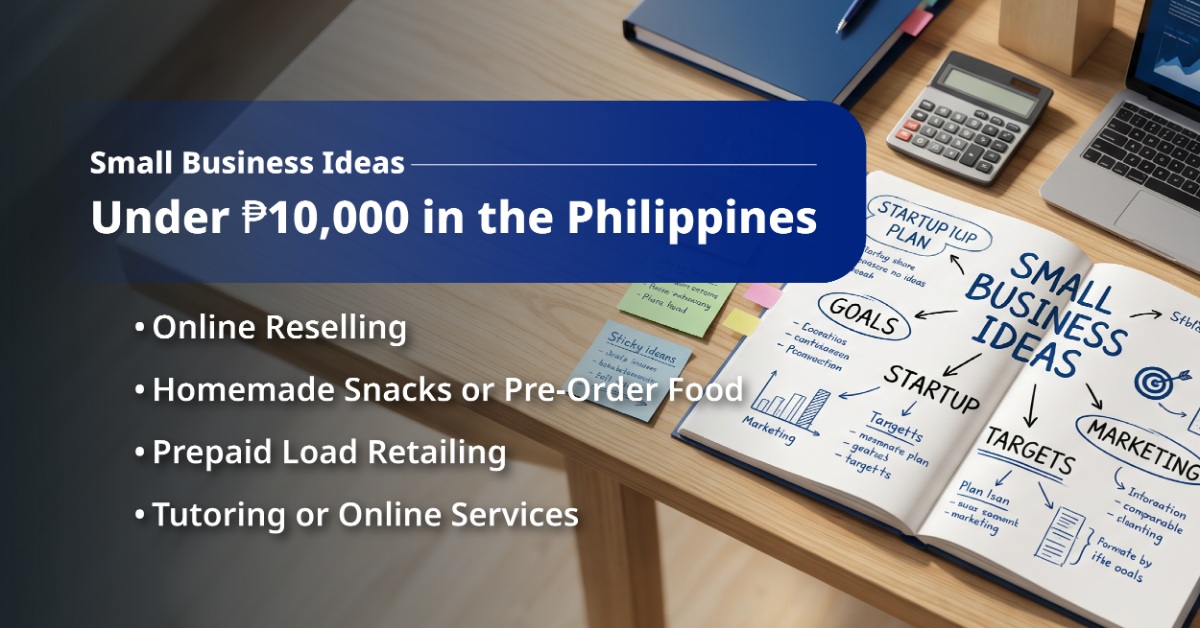
Small Business Ideas Under ₱10,000 in the Philippines
You don’t need a large budget to explore small business ideas in the Philippines. If you already have a smartphone, basic equipment, or space at home, you may be able to start with limited capital.
The key is to start with a few products or customers, test demand, and manage expenses before investing more money.
| Business Idea | Illustrative Capital | Skills Needed | Potential Location / Target Customers |
|---|---|---|---|
| 1. Online Reselling | ₱3,000 – ₱10,000 | Product selection, online selling | Home-based / online buyers |
| 2. Homemade Snacks or Pre-Order Food | ₱3,000 – ₱10,000 | Cooking, food safety | Residential areas / local pre-orders |
| 3. Prepaid Load Retailing | ₱1,000 – ₱5,000 | Basic mobile transactions | Neighborhoods / existing stores |
| 4. Tutoring or Online Services | ₱1,000 – ₱8,000 | Teaching, writing, or computer skills | Home / online |
These are illustrative planning ranges, not verified startup costs. Actual expenses may vary based on your location, existing equipment, supplier prices, permits, and operating needs.
1. Online Reselling
Online reselling lets you sell products such as clothing, accessories, or household items through social media or online marketplaces.
Start with a small selection of products to see what customers are interested in. Your budget may need to cover inventory, packaging, shipping arrangements, and platform fees.
Tip: Track your product costs and selling expenses to understand how much you earn from each sale.
2. Homemade Snacks or Pre-Order Food
If you enjoy cooking, selling homemade snacks or pre-order meals may be an option. You can start with a limited menu and prepare orders based on customer requests to help reduce unsold food.
Consider ingredient costs, food safety, packaging, delivery expenses, and applicable permits before accepting orders.
Tip: Test a few recipes with a small customer group before expanding your menu.
3. Prepaid Load Retailing
Prepaid load retailing involves selling mobile phone credits or other supported prepaid services to customers in your neighborhood.
You may be able to operate from home or add the service to an existing store. Before starting, check available service providers, transaction charges, retailer earnings, and local customer demand.
Tip: Keep accurate transaction records and monitor your available loading balance to manage daily operations.
4. Tutoring or Online Services
If you already have useful skills, tutoring or online services may allow you to start a business using equipment you own.
Possible services include academic tutoring, basic graphic design, writing, or administrative support. Your main expenses may involve internet access, software, learning materials, and online promotion.
Tip: Begin with a few clients, set clear service rates, and track the time and expenses involved in each project.
Remember: Starting with limited capital doesn’t guarantee steady income. Before expanding, review customer demand, actual expenses, and whether the business can consistently cover its operating costs.
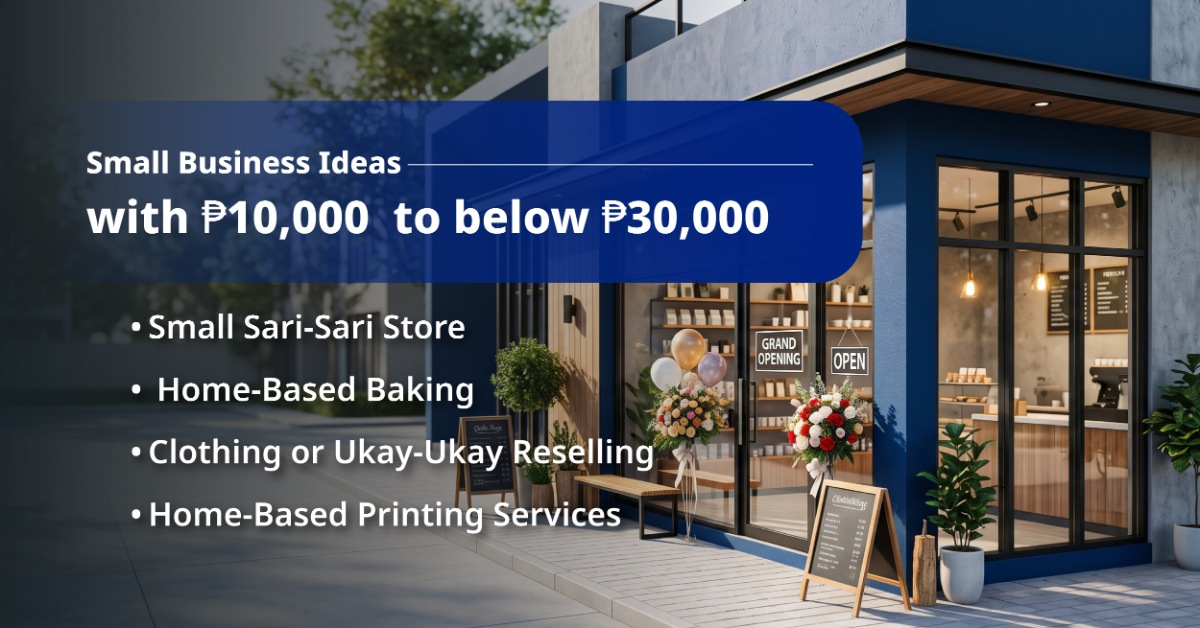
Small Business Ideas with ₱10,000 to below ₱30,000
With a budget of ₱10,000 – ₱30,000, you may be able to explore small businesses that need more inventory, equipment, or supplies. These ideas can suit people who want to run a small retail business or work from home without immediately investing in a large commercial space.
Start with the essentials, monitor customer demand, and keep part of your budget for daily operating expenses.
| Business Idea | Illustrative Capital | Skills Needed | Potential Location / Target Customers |
|---|---|---|---|
| 5. Small Sari-Sari Store | ₱10,000 – ₱30,000 | Stock control, customer service | Residential neighborhoods |
| 6. Home-Based Baking | ₱10,000 – ₱30,000 | Baking, pricing, food safety | Home / pre-order customers |
| 7. Clothing or Ukay-Ukay Reselling | ₱10,000 – ₱25,000 | Sourcing, sorting, selling | Online / community buyers |
| 8. Home-Based Printing Services | ₱15,000 – ₱30,000 | Computer use, printing, design | Near students / local offices |
These are illustrative planning ranges, not guaranteed startup costs. Actual expenses depend on existing equipment, supplier prices, location, permits, and operating requirements.
5. Small Sari-Sari Store
A small sari-sari store sells everyday essentials such as snacks, beverages, toiletries, and household items to nearby residents.
If you have a suitable space at home, you may be able to start with basic shelves, a limited inventory, and storage supplies. Choose products that customers regularly need and plan how often you’ll restock.
Tip: Check nearby competition and customer demand before buying inventory to avoid tying up your budget in slow-selling products.
6. Home-Based Baking
If you enjoy baking, selling cakes, cookies, or simple baked goods through advance orders may be worth exploring.
Starting from home can help reduce setup expenses if you already have suitable baking equipment. However, you’ll still need to consider ingredients, packaging, utilities, food safety, and applicable permits.
Tip: Begin with a small menu, calculate the cost of each product, and accept pre-orders to help manage ingredients and reduce waste.
7. Clothing or Ukay-Ukay Reselling
Clothing or ukay-ukay reselling involves sourcing affordable or second-hand clothing from appropriate suppliers and selling it online or within local communities. Before purchasing inventory, verify the source of the goods and check applicable trading and import restrictions.
Your starting budget may cover clothing inventory, cleaning, packaging, product photography, and delivery expenses. Check each item’s condition before listing it for sale, and describe any visible wear accurately.
Tip: Start with a small collection and track which styles and sizes attract buyers before purchasing more stock.
8. Home-Based Printing Services
Home-based printing services can serve students, households, and nearby offices that need documents, school materials, or basic printed designs.
If you already own a computer and suitable workspace, you can explore starting with a printer and essential supplies. Consider printer costs, paper, ink, electricity, and ongoing maintenance when planning your budget.
Tip: Check local demand and estimate your cost per printed page before setting prices.
Remember: These budgets may support a small-scale setup, particularly when you already have equipment or space available. A commercial storefront, fully equipped kitchen, or larger printing operation may require additional capital. Start with what you can manage and review your expenses before expanding.
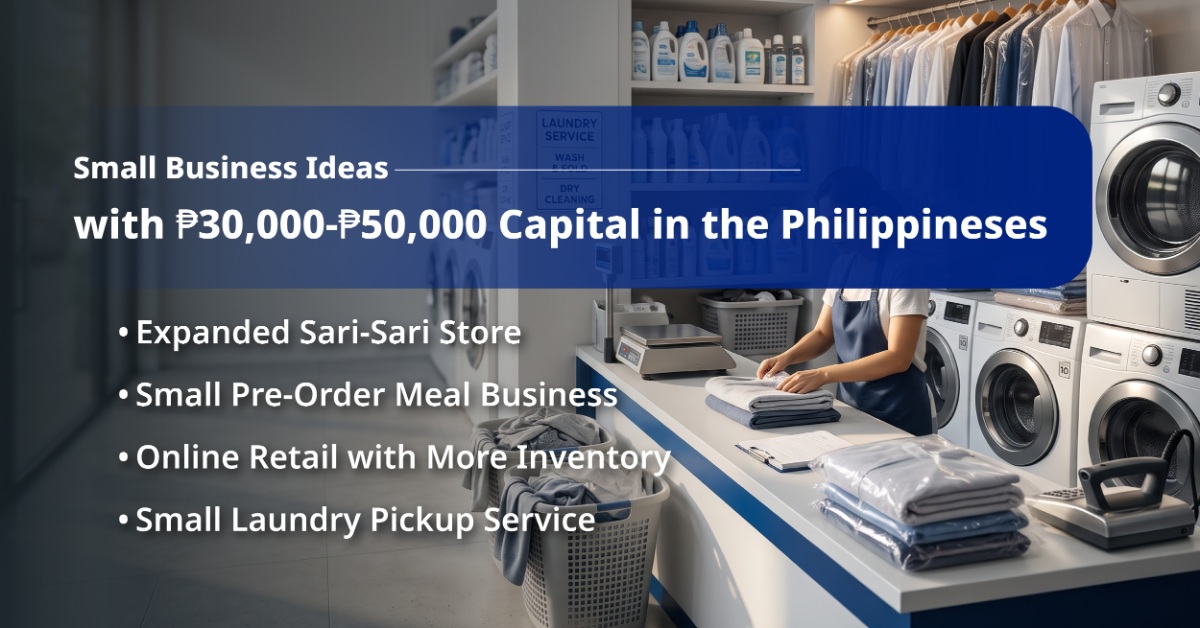
Small Business Ideas with ₱30,000–₱50,000 Capital in the Philippines
With ₱30,000 – ₱50,000 in starting capital, you may be able to explore small businesses that require more inventory, basic equipment, or additional operating funds. These options can suit people looking to expand an existing business or start a manageable home-based operation.
However, ₱50,000 may not cover every startup expense, especially if you need to rent a space, renovate a property, purchase commercial equipment, or secure permits.
| Business Idea | Illustrative Capital | Skills Needed | Potential Location / Target Customers |
|---|---|---|---|
| 9. Expanded Sari-Sari Store | ₱30,000 – ₱50,000 | Inventory management, daily bookkeeping | Residential neighborhoods |
| 10. Small Pre-Order Meal Business | ₱30,000 – ₱50,000 | Cooking, menu planning, costing | Near workers / residential customers |
| 11. Online Retail with More Inventory | ₱30,000 – ₱50,000 | Product sourcing, online marketing | Online marketplaces |
| 12. Small Laundry Pickup Service | ₱30,000 – ₱50,000 | Customer service, scheduling | Residential / condo communities |
These are illustrative planning ranges, not guaranteed startup costs. Actual expenses depend on your location, available equipment, supplier prices, permits, and daily operating needs.
9. Expanded Sari-Sari Store
An expanded sari-sari store offers a wider selection of everyday products, such as groceries, snacks, beverages, and household essentials.
If you already operate a small store, additional capital may help you increase inventory and serve more customer needs. Consider storage space, stock management, and funds for regular restocking before expanding.
Tip: Focus on products customers buy frequently and monitor slow-moving items to avoid tying up too much money in unsold stock.
10. Small Pre-Order Meal Business
A small pre-order meal business involves preparing meals for customers who place orders in advance, such as nearby workers or households.
Starting with a limited menu can help you manage ingredient costs, food preparation, packaging, food safety, and delivery expenses. You’ll also need to consider how many orders you can prepare with your available equipment and time.
Tip: Set an order deadline and plan portions based on confirmed orders to help reduce food waste.
11. Online Retail with More Inventory
If you’re already familiar with online selling, expanding your inventory may allow you to offer more product choices and reach different customer groups.
Your budget may cover additional stock, packaging, storage, and online selling expenses. However, unsold products, customer returns, delivery costs, and platform fees can affect your cash flow.
Tip: Use previous sales records and customer demand to decide which products are worth restocking before expanding your selection.
12. Small Laundry Pickup Service
A small laundry pickup service collects customers’ clothes and coordinates washing and drying with an existing laundry provider before arranging their return.
Unlike opening a full laundromat, this business focuses on pickup, delivery, scheduling, and customer service, without necessarily purchasing commercial washing machines.
Your expenses may include transportation, packaging, coordination with a laundry partner, and customer communication. Confirm the provider’s service charges and responsibilities before accepting orders.
Tip: Start within a manageable service area and set clear pickup schedules, pricing, and handling procedures.
How to Choose the Right Small Business Idea
Choosing the right small business idea in the Philippines starts with understanding your budget, skills, available time, and potential customers. A “magandang negosyo”, or promising business idea, should match what you can afford and what people are willing to buy.
A popular business idea isn’t automatically the right choice for everyone. Consider these factors before investing your savings.
Match the Business with Your Skills and Budget
Consider business ideas that make use of your existing skills, experience, and equipment. For example, if you enjoy cooking and already own basic kitchen tools, a pre-order food business may require less initial spending than a business that involves unfamiliar equipment or specialized skills.
Compare the estimated startup costs with your available savings, and avoid committing your entire budget before testing customer demand.
Check Customer Demand and Location
A business needs customers who are willing to pay for its products or services. Before starting, observe local buying habits, check nearby competitors, and look for unmet customer needs.
You can also test demand by offering a small number of products or accepting trial orders.
Tip: Choose a location or selling platform where your target customers are likely to shop.
Consider Time, Supplies, and Daily Expenses
Even a home-based small business requires regular attention and spending. Think about how much time you can dedicate to preparing products, serving customers, managing orders, and keeping records.
You’ll also need to budget for supplies, utilities, transportation, packaging, and restocking.
Before committing, estimate your daily expenses and keep some funds available for unexpected costs. This can help you manage cash flow while learning how your business performs.
How to Plan Your Small Business Startup Budget
Before starting a small business, it’s important to know where your money will go. A simple budget can help you prepare for setup expenses and the costs of keeping your business running.
Start by separating one-time expenses, such as equipment and registration, from ongoing costs, including inventory, transportation, marketing, and utilities. Don’t forget to set aside funds for unexpected expenses.
Calculate Your Starting Costs
List everything you need before opening your business, from basic equipment to your first batch of products.
- Equipment and Tools: Check actual prices for the items you’ll need.
- Initial Inventory: Estimate the cost of products, ingredients, or materials.
- Basic Setup: Include packaging, storage, signage, or workspace preparation.
- Registration and Permits: Account for applicable business registration and licensing expenses.
Ask suppliers for current prices and compare options rather than relying only on estimated costs.
Keep Money for Ongoing Expenses
Your startup budget shouldn’t end with your first purchase. Even a home-based business needs money to operate while sales are still developing.
Set aside funds for:
- Restocking: Replacing products, ingredients, or supplies.
- Transportation and Delivery: Moving goods or fulfilling customer orders.
- Utilities and Marketing: Electricity, internet, and promotional expenses.
- Unexpected Costs: Equipment repairs, price changes, or slower sales periods.
Check Business Registration and Permits
Before opening, check which registrations, permits, and tax requirements apply to your business in the Philippines.
Depending on your business structure and activity, you may need to register your business name with the Department of Trade and Industry (DTI) or register your business entity with the Securities and Exchange Commission (SEC). You should also check applicable BIR tax registration and local government permit requirements.
Requirements can vary by location and business activity, so confirm the latest rules and applicable costs with the relevant offices before setting your final budget.
How Can You Fund Your Small Business?
Starting a small business doesn’t always mean taking out a loan. You can use personal savings, contributions from business partners, or profits from early sales to support your business.
The right funding option depends on your startup costs, available resources, and financial situation. Before borrowing, consider how much money you need and whether your business can manage regular repayments.
Start with Savings or Existing Resources
Using your savings and equipment you already own can help you start small without taking on immediate debt.
For example, you might begin selling products from home, accept pre-orders, or reinvest early profits to purchase more supplies.
Start with a manageable budget and test customer demand before spending more on inventory, equipment, or expansion.
When Should You Consider Business Financing?
Business financing may be worth considering if you need additional funds for inventory, equipment, or business expansion and have a realistic repayment plan.
Before applying, review your business income, operating expenses, existing obligations, and total borrowing costs. Make sure you understand the interest, fees, repayment schedule, and any collateral requirements.
A loan isn’t necessary for every small business, and approval depends on the lender’s eligibility requirements and financial assessment.
To learn more about available options and what to prepare, explore our guide to small business loans in the Philippines before deciding whether financing fits your business needs.
Conclusion
Choosing small business ideas in the Philippines depends on your available capital, skills, customer demand, and daily operating costs. Whether you start from home, online, or within your neighborhood, a realistic budget and business plan can help you manage expenses and test demand. Start with what you can afford, track your progress, and explore business financing options if additional capital becomes necessary for future growth.
Asialink Finance Corporation offers financing options for eligible entrepreneurs in the Philippines. Its WAIS (Women’s Access to Inclusive Support) Loan is designed for women entrepreneurs, while other financing products are available to help businesses address their working capital, expansion, and other financing needs, subject to product eligibility requirements, financial assessment, and applicable lending conditions. Explore available options, review eligibility requirements, and assess repayment responsibilities before applying for financing.
FAQs
What are some low-capital business ideas in the Philippines?
Low-capital business ideas in the Philippines include online reselling, homemade snacks, prepaid load retailing, and tutoring services. Some can be started from home using existing equipment. Compare startup costs, customer demand, and ongoing expenses before investing your savings.
What are the best home-based business ideas for beginners?
Home-based business ideas for beginners include online selling, pre-order food, tutoring, and basic digital services. The right choice depends on your skills, available equipment, and budget. Start with a few customers to test demand before expanding your business.
What small business can I start without renting a store?
You can explore online reselling, home-based baking, tutoring, printing services, or laundry pickup coordination without renting a storefront. These businesses may operate from home, depending on space and local regulations. Consider equipment, supplies, delivery expenses, and customer demand before starting.
What food business can I start with a small budget?
Homemade snacks, cookies, packed lunches, and pre-order meals are food business ideas worth exploring with limited capital. Start with a small menu and estimate ingredient, packaging, and delivery costs. Follow food safety practices and check applicable permits before selling.
Do I need to register a home-based business in the Philippines?
Yes, home-based businesses generally have registration and tax obligations in the Philippines. Depending on your setup, you may need DTI or SEC registration, BIR registration, and local permits. Check applicable requirements with government offices before starting operations.