
Business Expansion Loan in the Philippines: A Guide to Growing
Key Takeaway
- A business expansion loan may help an existing business open new branches, purchase equipment, or add vehicles to support growth.
- Secured business loans may use eligible vehicles or real estate as collateral, but approval and financing terms depend on the lender’s assessment.
- Before applying for a business loan, review your expansion plan, cash flow, required documents, total loan costs, and ability to repay.
Expanding a business brings new opportunities and costs. Whether you’re adding delivery trucks, opening another branch, or upgrading equipment, a business expansion loan may help support your plans, subject to lender assessment.
Explore business expansion loan options in the Philippines and learn about collateral, lender requirements, application documents, and financing risks to make informed decisions before applying.
What Is a Business Expansion Loan?
A business expansion loan is financing that helps existing businesses fund planned growth, such as opening new branches, purchasing equipment, or adding delivery vehicles.
Unlike loans mainly used for everyday operating expenses, expansion financing typically supports investments that help a business grow over time. However, some financing products may cover both purposes.
Loan eligibility, permitted uses, and repayment terms depend on the lender’s requirements and assessment.
Who Should Consider a Business Expansion Loan?
A business expansion loan may be worth considering if your company has:
- An established operating history with business and financial records.
- A clear expansion plan, including how the funds will be used.
- Manageable repayment obligations based on expected cash flow.
- Access to the required documents and eligible collateral, where applicable.
Expansion Financing vs. Working Capital Loans
Both financing options support business needs, but they serve different purposes.
| Business Expansion Financing | Working Capital Loans |
|---|---|
| Supports planned business growth | Supports everyday business operations |
| May fund new branches, vehicles, or equipment | May fund inventory, supplier payments, or operating expenses |
| Often focuses on longer-term investments | Often addresses shorter-term cash flow needs |
Some lenders offer financing products that support both expansion and working capital. Check the permitted uses, total loan costs, and repayment terms before choosing an option.
What Can a Business Expansion Loan Be Used For?
The right financing option depends on what your business needs, how much the investment will cost, and your ability to manage repayments. Permitted loan uses also vary by lender and financing product.
Opening New Business Branches
Opening another branch can help your business reach more customers, but it also comes with additional expenses.
Common costs include:
- Rent deposits and advance payments for commercial space.
- Store improvements and fixtures to prepare the new location.
- Inventory and supplies needed before opening.
- Hiring and staff training for additional employees.
Your expansion plan should account for branch operating expenses and loan repayments, even before the new location generates enough revenue.
Buying Equipment and Machinery
If your business needs to increase production or improve operations, equipment financing may help fund machinery, manufacturing tools, or other essential equipment.
For example, a food manufacturer may need additional processing machines, while a printing business might invest in equipment to handle larger orders.
Remember to budget beyond the purchase price. Installation, maintenance, repairs, and employee training can add to the overall cost.
Expanding a Business Vehicle Fleet
For logistics, distribution, and delivery businesses, adding trucks, vans, or other commercial vehicles may help serve more customers and manage growing delivery needs.
A distributor, for example, might consider another delivery truck to support additional retail partners or reach new service areas.
Depending on the product, vehicle financing may be an option for purchasing commercial vehicles, subject to eligibility and lender assessment.
When Does Adding More Vehicles Make Financial Sense?
Before adding vehicles, compare expected delivery demand with the total cost of ownership.
Consider:
- Vehicle purchase and financing costs
- Fuel, tolls, and routine maintenance
- Insurance, registration, and repairs
- Driver salaries and other operating expenses
More vehicles don’t automatically mean higher profits. Check whether the additional business revenue can reasonably cover these expenses and loan repayments without putting pressure on your existing cash flow.
Business Expansion Financing Options in the Philippines
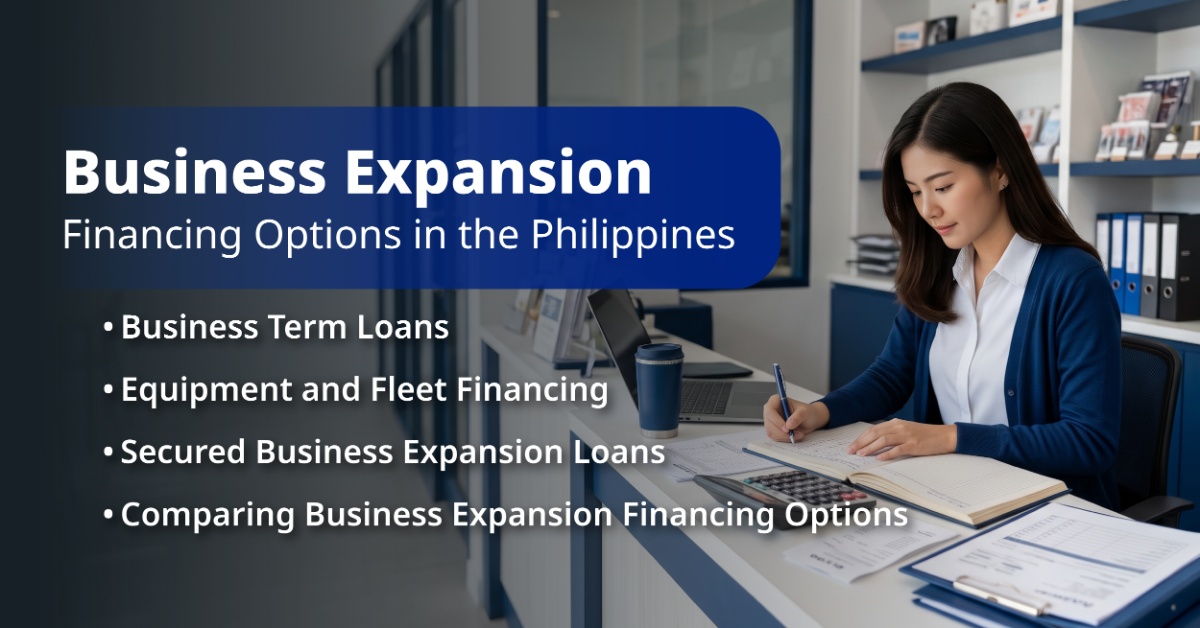
Growing businesses in the Philippines can explore different financing options depending on their expansion goals, available assets, and repayment capacity.
However, not all lenders offer the same products or use the same names, so it’s important to compare their requirements and terms.
Business Term Loans
A business term loan provides financing that a company repays according to an agreed schedule.
Businesses may use this type of loan for expansion projects, such as opening a new branch or purchasing equipment, depending on the lender’s permitted uses.
Before applying, review the total loan cost, repayment schedule, and projected business cash flow to determine whether the payments fit your budget.
Equipment and Fleet Financing
Equipment and fleet financing can help businesses purchase machinery, delivery trucks, vans, or other commercial assets needed for operations.
For example, a manufacturing company may need additional machines, while a logistics business might invest in more delivery vehicles.
Before choosing this option, confirm who owns the asset during the financing period, whether it serves as collateral, and what happens if repayments are missed.
Secured Business Expansion Loans
A secured business expansion loan uses eligible assets as collateral to support a financing application.
Depending on the lender and financing product, eligible collateral may include real estate or vehicles. Other asset types may be accepted under specific lending arrangements.
Providing collateral does not guarantee loan approval. If your business fails to meet its repayment obligations, the pledged asset may be at risk, depending on the loan agreement and applicable law.
Comparing Business Expansion Financing Options
| Financing Option | Common Uses | What to Check |
|---|---|---|
| Business Term Loan | Branch expansion, equipment, or other approved business investments | Repayment schedule, total cost, and eligibility |
| Equipment Financing | Machinery, production tools, and business equipment | Ownership terms, collateral, and maintenance costs |
| Fleet Financing | Trucks, vans, and commercial vehicles | Vehicle ownership, insurance, and operating expenses |
| Secured Business Loan | Eligible expansion expenses supported by existing assets | Collateral requirements, asset valuation, and repayment risks |
The best financing option depends on your business needs and financial position. Compare the available products, required documents, total costs, and repayment responsibilities before making a decision.
Business Loan with Collateral: Using Vehicles or Property
A secured business loan may allow eligible companies to use assets, such as commercial vehicles or real estate, as collateral to support a financing application.
Lenders typically assess the asset’s ownership, condition, market value, and legal status, along with the business’s ability to repay.
Using a Fleet of Vehicles as Collateral
If your company owns several trucks, vans, or other commercial vehicles, some lenders may consider one or more eligible vehicles as collateral, depending on their financing products and policies.
You may need to prepare:
- Vehicle registration documents, such as the Official Receipt and Certificate of Registration (OR/CR).
- Proof of ownership and other supporting records.
- Vehicle details, including make, model, year, and condition.
- Existing financing information, if any vehicles are still subject to outstanding loans or mortgage annotations.
Using Property as Collateral for a Business Loan
A loan using property as collateral may allow eligible businesses to use land or real estate to support their financing needs, subject to the lender’s requirements and assessment.
For example, an established retailer might consider using an eligible property to support plans for a new branch, subject to the lender’s requirements.
The assessment may involve:
- Ownership verification: Checking the property title and supporting documents.
- Property appraisal: Evaluating the property’s condition and value.
- Legal status: Reviewing existing mortgages or other legal restrictions affecting the property.
Can You Use Multiple Assets as Collateral?
Some financing arrangements may involve more than one asset, such as several commercial vehicles or multiple properties.
However, acceptance depends on the lender’s policies, the financing product, and the legal and valuation requirements for each asset. Multiple assets are not automatically accepted under a single loan agreement.
Before applying, ask which collateral types and combinations are permitted and what documents are required.
What Happens If Your Business Cannot Repay?
Missing loan repayments can put pledged assets at risk. Depending on the loan agreement and applicable Philippine law, the lender may take steps to enforce its rights over the collateral. This could result in repossession, foreclosure, or the loss of the pledged asset, depending on the type of collateral and legal process.
Before signing, review the repayment schedule, total loan costs, default provisions, and collateral terms. Make sure your business can manage the payments even if revenue falls below expectations.
How Do Lenders Assess Business Expansion Loans?
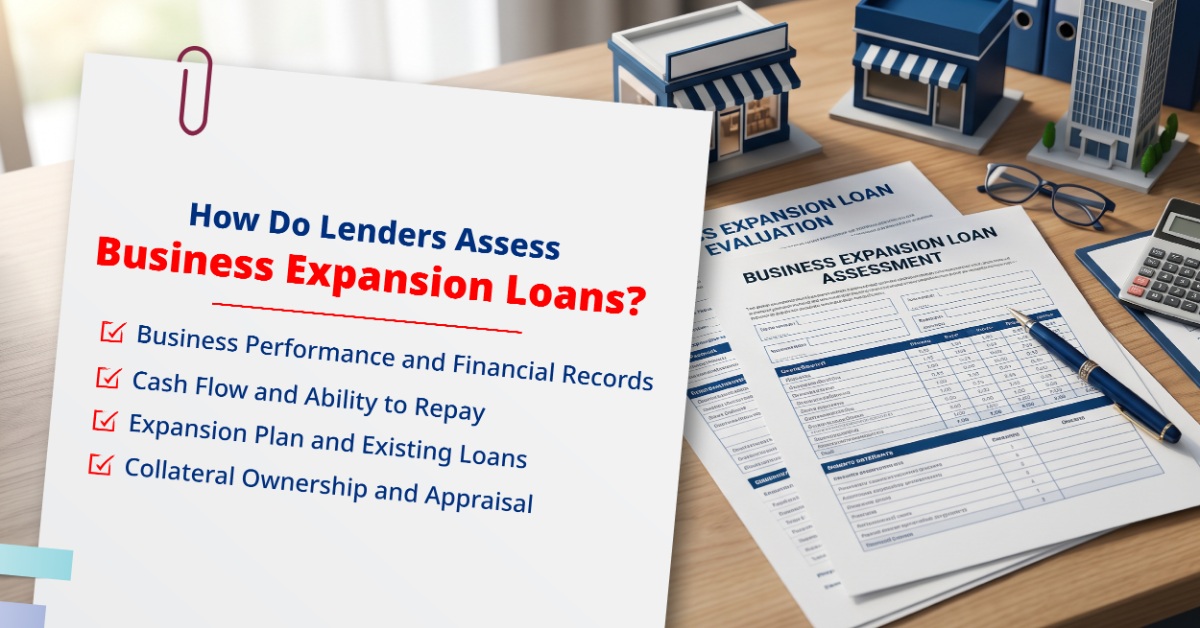
When you apply for a business expansion loan, lenders typically look at more than your growth plans. While requirements vary by lender, here are some common factors considered during the assessment.
Business Performance and Financial Records
Lenders may review your company’s financial history to understand how the business operates and manages its expenses.
Common records include:
- Sales and revenue records to understand business income.
- Financial statements showing income, expenses, and profitability.
- Bank statements and tax documents to support financial information.
Cash Flow and Ability to Repay
Cash flow is an important part of loan assessment. Lenders may check whether your business generates enough income to cover operating expenses and loan repayments.
This matters because a new branch, vehicle, or piece of equipment may take time to generate additional revenue.
Check whether your existing business cash flow can support loan repayments, especially if the expansion takes longer than expected to generate revenue.
Expansion Plan and Existing Loans
Lenders may also want to understand how you plan to use the financing and whether the expansion is financially manageable.
They may consider:
- Purpose of financing: Whether the funds will support equipment, vehicles, branches, or other eligible expenses.
- Expansion budget: Estimated investment and operating costs.
- Existing loans: Current business loans and repayment obligations.
- Expected returns: How the expansion may contribute to future revenue.
Collateral Ownership and Appraisal
For secured financing, lenders may verify who owns the pledged assets, their legal status, and their assessed value.
Depending on the collateral, this may involve reviewing vehicle registration documents, property titles, existing mortgages or financing annotations, and appraisal results.
Collateral value is only one factor in the assessment. The financing amount and approval decision also depend on lender policies, eligibility requirements, and your business’s ability to repay.
Business Expansion Loan Requirements and Documents
Planning to apply for a business expansion loan in the Philippines? Preparing your documents early can help you understand what lenders may need to assess your application.
Requirements vary by lender, financing product, and business structure. The following are common examples, not a confirmed Asialink Finance document checklist.
Business Registration Documents
Lenders may request documents to verify that your company is registered and operating legally.
Common examples include:
- DTI or SEC Registration: Depending on your business structure.
- Business or Mayor’s Permit: To verify applicable local business authorization.
- Business Identification Details: Such as your registered business name, address, and tax identification information.
Check that your registration details are accurate and up to date before preparing your application.
Financial Statements and Bank Records
Your financial records help lenders understand your company’s performance and ability to manage repayments.
Depending on the business, lenders may request:
- Financial statements showing revenue, expenses, and profitability.
- Bank statements reflecting business transactions and cash flow.
- Tax returns or related records supporting your financial information.
Collateral Documents
If you’re considering a secured business loan, you may need documents proving ownership of the assets offered as collateral.
Examples include:
- Property titles and supporting ownership documents.
- Vehicle registration records, such as the Official Receipt and Certificate of Registration (OR/CR).
- Proof of ownership and information about existing mortgages, financing annotations, or other legal restrictions, where applicable.
Lenders may also require an asset appraisal or inspection before deciding whether the collateral is acceptable.
Business Expansion Plan
A simple business expansion plan can help explain why you need financing and how you intend to manage the additional costs.
Consider preparing a short checklist covering:
- Expansion Goal: Are you opening another branch, purchasing equipment, or adding vehicles?
- Use of Funds: What expenses will the financing cover?
- Estimated Budget: How much will the planned expansion cost?
- Repayment Plan: How will your existing business cash flow support loan payments?
- Potential Risks: What happens if the expansion generates less revenue than expected?

Business Expansion Financing Examples for Medium Enterprises
Every business has different reasons for expanding. Here are three hypothetical scenarios showing how medium-sized businesses in the Philippines might use financing to support growth.
These are illustrative examples, not actual Asialink Finance customer cases. Financing eligibility and permitted uses depend on the lender’s assessment and product requirements.
Example 1 — A Logistics Business Expanding Its Delivery Fleet
An established logistics company in Metro Manila receives more delivery requests and considers purchasing additional trucks to serve new customers.
Fleet financing may help cover eligible vehicle purchases, while the company might explore using existing commercial vehicles as collateral if the lender permits it.
Before applying, the business should review customer demand, vehicle purchase costs, fuel, maintenance, insurance, and driver expenses. It should also check whether existing cash flow can support repayments if new delivery contracts are delayed.
Example 2 — A Retail Business Opening Another Branch
A growing retailer in Cebu plans to open another store to reach customers in a nearby area.
A business expansion loan may help fund eligible expenses, such as rent deposits, store improvements, inventory, and equipment.
However, the retailer must also budget for staff salaries, utilities, and other recurring costs. Since a new branch may take time to generate enough revenue, the business should assess whether its existing operations can cover these expenses and loan repayments during the initial months.
Example 3 — A Manufacturing Business Buying New Equipment
A manufacturing company in Laguna wants to increase production capacity to handle additional customer orders.
Equipment financing or other eligible business financing may help the company purchase machinery needed for expansion.
Beyond the purchase price, the manufacturer should consider installation, maintenance, staff training, and possible production downtime.
Costs, Risks, and Repayment Responsibilities
A business expansion loan can help support your company’s growth, but it also comes with financial responsibilities. Loan repayments remain due even if your expansion doesn’t generate the expected revenue.
Before taking out a business loan, review the total financing cost, repayment schedule, additional fees, and collateral risks to make sure the loan fits your business’s financial position.
Understand the Total Cost of Your Business Loan
When comparing business loans, look beyond the advertised interest rate. Review applicable fees, financing charges, and the total amount payable to understand the full cost of your loan.
Check the following:
- Interest and financing charges: Understand how they affect the total repayment amount.
- Processing and other fees: Review all applicable charges disclosed by the lender.
- Repayment schedule: Confirm payment amounts, due dates, and the loan term.
- Late payment charges: Check the consequences of missed or delayed payments.
Ask for a clear breakdown of the total amount payable before signing. The Securities and Exchange Commission (SEC) oversees financing companies in the Philippines, and applicable disclosure rules help loan applicants understand financing costs and terms.
Plan for Delays in Business Growth
Business expansion doesn’t always generate immediate revenue. A new branch may need time to attract customers, while additional vehicles or equipment may take time to operate at full capacity.
Before applying for a business loan, consider whether your existing cash flow can cover operating expenses and loan repayments if growth takes longer than expected.
Preparing a realistic budget and keeping a financial buffer can help your business manage unexpected expenses.
Understand the Risk to Collateral
If you use business vehicles, land, or property as collateral, those assets may be at risk if your company cannot meet its repayment obligations.
Depending on your loan agreement and applicable law, the lender may be able to enforce its security rights over the pledged assets.
Before signing, review the collateral terms, default conditions, and repayment responsibilities. Make sure you understand the potential consequences of missed payments, especially when the assets are essential to your daily operations.
Conclusion
Business expansion loans may help established companies open new branches, purchase equipment, or add commercial vehicles. However, financing should support a realistic growth plan and manageable repayment obligations. Before applying, compare loan options, review total loan costs, collateral requirements, and repayment schedules, and assess whether your existing cash flow can support payments if growth takes longer than expected.
Asialink Finance Corporation offers financing options for eligible businesses, including the GrowBiz Loan for qualified medium enterprises. Explore the product’s requirements, permitted uses, collateral conditions, and repayment terms. All applications are subject to assessment.
FAQs
What is fleet financing for a business?
Fleet financing helps eligible businesses purchase trucks, vans, or other commercial vehicles for deliveries, distribution, and daily operations.
Before applying, check the lender’s eligibility requirements, ownership arrangements, total loan costs, and repayment terms to understand your financial responsibilities.
Can I use multiple vehicles as collateral for one business loan?
Some lenders may accept multiple vehicles as collateral under one financing arrangement, depending on their policies. Each vehicle may require ownership verification and appraisal.
Acceptance isn’t guaranteed, so confirm eligible vehicle types, documentation, and collateral arrangements directly with the lender.
What do lenders check before approving an expansion loan?
Lenders may assess your business performance, financial statements, cash flow, existing loans, expansion plans, and available collateral. They may also review ownership documents and asset valuations.
Approval depends on the lender’s assessment, applicable requirements, and your business’s ability to repay.
Does a business need to be profitable to qualify for an expansion loan?
Not all lenders apply the same profitability requirements. Some may consider cash flow, operating history, financial records, and repayment capacity alongside profitability.
A business without consistent profits may face additional scrutiny. Eligibility depends on the lender’s policies and assessment.
What happens to business collateral if I miss a payment?
Missing a payment may result in late charges or other consequences under your loan agreement. Continued nonpayment could put pledged vehicles or property at risk of repossession or foreclosure, subject to applicable law.
Review default provisions and contact your lender promptly.