
How to Get a Small Business Loan in the Philippines: 6 Steps
Key Takeaway
- Small business loan applications typically require business documents, financial records, valid identification, and other lender-specific requirements.
- Lenders assess factors such as business performance, repayment capacity, credit information, and collateral when applicable.
- Before applying, compare secured and unsecured financing, total borrowing costs, and repayment responsibilities.
Running a small business often requires extra funds to purchase inventory, upgrade equipment, manage daily operations, or expand. But understanding loan requirements and the application process can be confusing, especially if you’re applying for the first time.
Learn how to get a small business loan in the Philippines, including the requirements, documents, application steps, collateral options, and repayment responsibilities you should understand before applying.
This guide explains what lenders may look for, how to prepare your application, and what to expect throughout the process. With the right information, you can compare financing options, understand your responsibilities, and choose a loan that fits your business needs and budget.

What Is a Small Business Loan in the Philippines?
A small business loan is a type of financing that helps business owners cover eligible expenses, manage cash flow, or support business growth. In the Philippines, businesses may use these funds for working capital, inventory, equipment, or expansion, depending on the loan product.
However, loan requirements, eligible business purposes, and financing terms vary by lender. Understanding these details can help you choose an option that matches your business needs.
What Can a Small Business Loan Be Used For?
A small business loan may help cover different business expenses, including:
- Operating Expenses: Pay for rent, utilities, and other day-to-day business costs.
- Inventory Purchases: Stock up on products or materials to meet customer demand.
- Equipment and Machinery: Purchase or upgrade tools, machinery, or business equipment.
- Business Expansion: Support plans to open another location or increase business capacity.
The permitted use of loan funds depends on the lender’s policies and your financing agreement.
Who Typically Applies for Business Financing?
Different types of businesses may apply for financing, including:
- Sole Proprietors: Individuals who own and operate their businesses.
- Partnerships: Businesses owned and managed by two or more partners.
- Corporations: Registered companies seeking funds for operations or growth.
- Growing Businesses: Enterprises looking for additional capital to support expansion.
Eligibility depends on the financing product, business documents, financial capacity, and lender assessment. Not every business type will qualify for every loan product.
Secured vs Unsecured Business Loans: What’s the Difference?
When exploring small business loans in the Philippines, you’ll likely come across two options: secured and unsecured loans. The main difference is whether you need to provide collateral, such as property or a vehicle, to support your application.
Both loan types have different eligibility requirements, documentation needs, and risks. Their borrowing costs depend on the lender’s offer and financing terms. Understanding how they work can help you decide which financing option suits your business.
How Do Secured Business Loans Work?
A secured business loan uses an eligible asset, such as real estate or a vehicle, as collateral. The lender may assess the asset’s value and condition before deciding on your application.
While collateral supports the loan, approval still depends on the lender’s assessment and requirements. If you fail to meet your repayment obligations, you may risk losing the pledged asset, subject to applicable laws and contract terms.
What Are Unsecured Business Loans?
An unsecured business loan does not require you to pledge a specific asset as collateral. However, lenders still evaluate your business income, credit history, existing debts, and repayment capacity.
You may also need to provide financial documents or meet other contractual requirements. An unsecured loan doesn’t mean fewer responsibilities or guaranteed approval.
Which Type May Suit Your Business?
The right option depends on your business needs, available assets, and ability to manage repayments.
| Comparison Factor | Secured Business Loan | Unsecured Business Loan |
|---|---|---|
| Collateral | Requires an eligible asset | No specific pledged asset required |
| Eligibility | Based on collateral and financial assessment | Based on financial and credit assessment |
| Documents | May require asset ownership and appraisal documents | May require business and financial records |
| Borrowing Costs | Depend on the lender and loan terms | Depend on the lender and loan terms |
| Main Risks | Possible loss of pledged collateral, late charges, collection action, and credit impact | Possible late charges, collection action, legal proceedings, and credit impact |
| Repayment | Must follow the agreed payment schedule | Must follow the agreed payment schedule |
Before choosing, compare loan eligibility, collateral requirements, total borrowing costs, and monthly repayment obligations.
Neither option is automatically cheaper or easier to qualify for. Choose financing that matches your business needs and repayment capacity.
Small Business Loan Requirements in the Philippines
If you’re searching for business loan requirements in the Philippines, start by understanding which documents lenders may request. Preparing your business registration, financial records, and identification can help you get ready for the application process.
Requirements vary depending on the lender, business type, loan product, and collateral. The following are common examples, not an official requirements checklist for Asialink Finance Corporation.
Business Registration and Permits
Lenders may ask for documents that confirm your business is legally registered and operating. Common requirements include:
- DTI Registration: Business Name Registration through the Department of Trade and Industry (DTI), generally required for sole proprietors operating under a business name other than their registered personal name.
- SEC Registration: Registration documents for corporations and partnerships, as applicable, from the Securities and Exchange Commission (SEC).
- CDA Registration: Relevant registration documents for cooperatives from the Cooperative Development Authority (CDA).
- Business Permits: Applicable local government permits showing your business is authorized to operate.
- BIR Documents: Tax registration records and other applicable documents from the Bureau of Internal Revenue (BIR).
Financial Statements and Proof of Business Income
Lenders may review your business income, cash flow, and financial records to assess repayment capacity.
Depending on the loan product, you may need:
- Financial Statements: Records showing your business’s income, expenses, assets, and liabilities.
- Cash Flow Records: Information about money coming into and going out of your business.
- Sales Records: Documents showing sales activity and business performance.
- Bank Statements: Records of business transactions and account activity.
- Tax Documents: Applicable tax returns or other supporting financial records.
Identification and Business Ownership Documents
Lenders also need to verify who owns the business and who is authorized to apply for financing.
Common documents may include:
- Valid Government-Issued IDs: Identification for the borrower, business owner, or authorized representative.
- Proof of Business Ownership: Documents confirming ownership or partnership interests.
- Authorized Signatory Documents: Board resolutions, secretary’s certificates, or other authorization records, where applicable.
- Additional Verification Documents: Other records requested to confirm borrower and business information.
Collateral Documents, If Applicable
If you’re applying for a secured business loan, the lender may require documents to verify ownership and assess the value of the pledged asset.
Depending on the collateral type, these may include:
- Vehicle Documents: Official Receipt (OR), Certificate of Registration (CR), and other applicable ownership records.
- Property Documents: Transfer Certificate of Title (TCT), Condominium Certificate of Title (CCT), or other relevant property records.
- Collateral Appraisal Requirements: The lender may require a vehicle inspection, property valuation, or supporting records to assess the collateral’s value and eligibility.
- Supporting Documents: Additional records needed to verify ownership, existing mortgage annotations, other encumbrances, or collateral eligibility.
Having these documents ready does not guarantee loan approval. Your application remains subject to the lender’s eligibility requirements, document verification, financial assessment, and applicable collateral appraisal.
Before applying with Asialink Finance Corporation, check the requirements for your chosen financing product to confirm which documents you need.
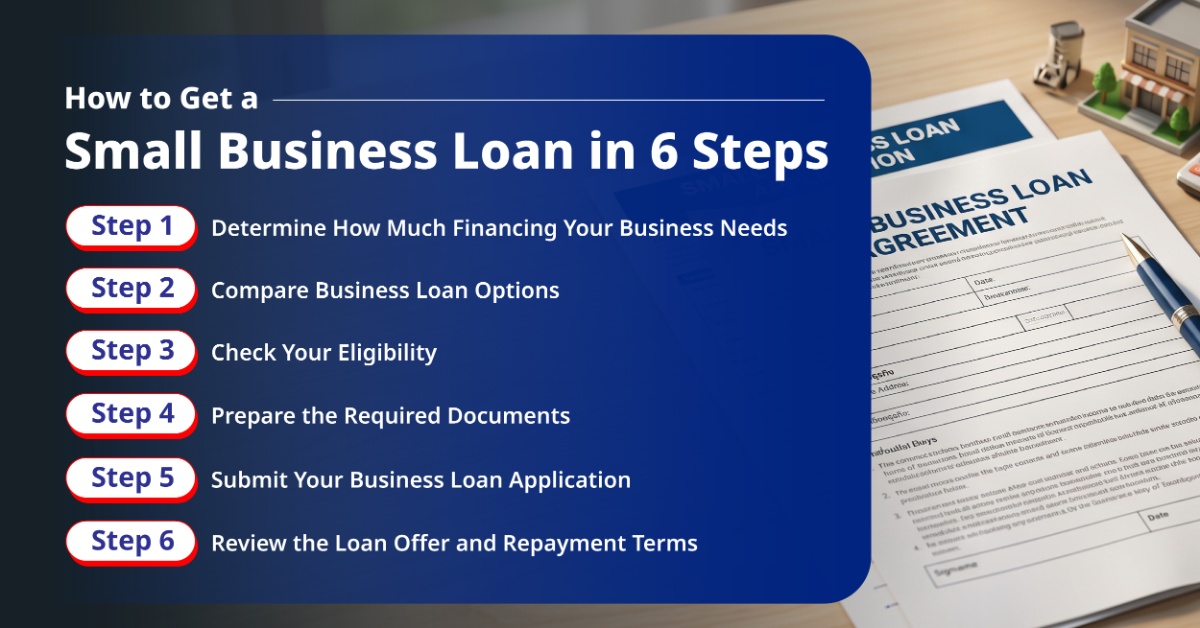
How to Get a Small Business Loan in 6 Steps
When exploring business loan options in the Philippines, start by identifying your financing needs and preparing the required documents. These six steps can help you understand what to expect before approaching a lender. Whether you’re funding daily operations or planning an expansion, following these six steps can help you prepare before approaching a lender.
The process below is a general guide. Actual application steps and requirements vary by lender and loan product.
Step 1 — Determine How Much Financing Your Business Needs
Start by identifying why your business needs financing and how much you can afford to repay.
List the expenses you want to cover, such as inventory, equipment, or operating costs. Then review your available cash, regular expenses, and expected business income.
Borrowing only what your business needs can help you manage repayments without putting unnecessary pressure on your cash flow.
Step 2 — Compare Business Loan Options
Not all business loans work the same way. Compare secured and unsecured loans to see which options match your needs and available resources.
Before choosing, check:
- Loan Purpose: Does the lender allow funds to be used for your intended business expenses?
- Collateral: Will you need to pledge property, a vehicle, or another eligible asset?
- Total Borrowing Cost: What interest and applicable fees will you pay?
- Repayment Terms: Can your business manage the payment schedule?
A lower advertised interest rate doesn’t always mean a lower total borrowing cost. Review the full financing offer before deciding.
Step 3 — Check Your Eligibility
Before applying, review the lender’s eligibility requirements to see whether your business meets the basic criteria.
Lenders may consider:
- Business Registration: Whether your business has the required registration and permits.
- Operating History: How long your business has been operating, if a minimum period is required.
- Income and Cash Flow: Whether your business generates enough income to support repayments.
- Existing Debts: Your current financial obligations.
- Collateral Eligibility: Whether your proposed asset meets the lender’s requirements, if applicable.
Meeting the basic requirements does not guarantee approval. Your application will still undergo the lender’s assessment.
Step 4 — Prepare the Required Documents
Gather the documents your lender requests, including business registration records, valid IDs, financial statements, and proof of income.
For secured loans, you may also need property titles, vehicle registration documents, or other collateral records.
Make sure all information is complete, current, and consistent. Missing documents or mismatched details may require additional verification and delay the assessment.
Step 5 — Submit Your Business Loan Application
Once your documents are ready, submit your application through the lender’s available channels, which may include online applications or designated branches.
Depending on the product, the lender may:
- Verify your personal and business information.
- Review your income, cash flow, and existing obligations.
- Request additional supporting documents.
- Inspect or appraise the proposed collateral, if required.
Submitting an application does not mean the loan is approved. The lender must complete its assessment before confirming an offer.
Step 6 — Review the Loan Offer and Repayment Terms
If your application is approved, take time to review the interest calculation, applicable fees, repayment schedule, and loan conditions before accepting the offer.
Check whether the monthly payments fit your business’s cash flow and understand what happens if you miss a payment.
Understand the Total Cost of Borrowing
The total cost of borrowing goes beyond the advertised interest rate. Before signing, review:
- Interest and Finance Charges: Understand how interest is calculated and review the disclosed borrowing costs.
- Processing and Other Fees: Check all applicable charges included in or paid separately from the loan.
- Repayment Schedule: Confirm each payment amount, due date, and loan duration.
- Collateral Conditions: Understand your responsibilities and the risks if you default.
- Total Amount Payable: Review the full loan repayment amount and any separately payable expenses.
- Late Payment Charges: Ask about penalties or fees that may apply to overdue payments.
At Asialink Finance Corporation, repayment terms depend on the financing product.
General loan options may have terms ranging from 12 to 48 months, while certain real estate and mortgage financing options may offer longer repayment periods of 5 to 10 years. The GrowBiz Loan for medium enterprises may offer repayment terms of up to 7 years, subject to current product requirements and assessment.
Asialink also applies late payment fees under its applicable loan terms. For documents that are ready for pickup, clients have 60 days from notification to claim them. If documents remain unclaimed and are later requested again, a ₱1,500 reprocessing fee applies under the stated policy.
Before accepting any loan offer, confirm the current product terms, full borrowing costs, and repayment responsibilities with your lender.
What Do Lenders Check Before Approving a Business Loan?
Before approving a small business loan in the Philippines, lenders assess your business’s financial health, repayment capacity, existing debts, and supporting documents. For secured loans, collateral may also be evaluated.
Loan approval depends on the lender’s assessment and eligibility requirements.
Business Cash Flow and Financial Performance
Lenders review your business income, expenses, and cash flow to understand whether you can manage regular loan payments.
Consistent cash flow and reliable financial records, such as sales reports, bank statements, and financial statements, can help demonstrate your business’s repayment capacity.
Existing Debt and Credit Assessment
Your existing loans, payment obligations, and credit history may affect the lender’s assessment.
Lenders consider whether your business can afford additional repayments alongside current expenses. Having outstanding debts doesn’t automatically mean your application will be declined.
Collateral Ownership and Appraisal
For secured business loans, lenders may verify ownership and assess the value of the pledged asset, such as a vehicle or property.
This process may include document verification, vehicle inspection, property appraisal, and checks for existing liens.
Collateral alone does not guarantee approval. The lender will still assess your eligibility, financial capacity, and applicable loan requirements.

Common Reasons Business Loan Applications May Be Declined
A small business loan application may be declined if the lender finds issues with your documents, repayment capacity, collateral, or eligibility. Understanding these common reasons can help you prepare before applying.
Each lender has its own assessment criteria, and meeting the requirements does not guarantee approval.
Missing or Inconsistent Documents
Incomplete or outdated documents may affect your application. Common issues include expired business permits, missing financial records, or information that doesn’t match across submitted documents.
Before applying, check that your records are complete, updated, and consistent.
Insufficient Repayment Capacity
Lenders assess whether your business can manage loan payments alongside existing expenses and debts.
Limited cash flow, high financial obligations, or inconsistent income may affect your eligibility. Review your business finances to determine how much you can realistically afford to repay.
Collateral or Eligibility Issues
For secured loans, collateral must meet the lender’s requirements. A vehicle or property may not qualify because of its condition, ownership documents, appraised value, or other restrictions.
Your business must also meet the loan product’s eligibility criteria.
How to Prepare Before Reapplying
If your application is declined, consider these steps:
- Review Feedback: Ask the lender about possible issues, if feedback is available.
- Update Documents: Correct missing, expired, or inconsistent records.
- Check Affordability: Review your cash flow, existing debts, and repayment capacity.
- Explore Other Options: Compare financing products that may better match your business needs and eligibility.
Addressing these issues can help you prepare a more complete application, but approval remains subject to the lender’s assessment.
Conclusion
Understanding how to get a small business loan in the Philippines starts with choosing financing that fits your business needs. Compare loan options, eligibility requirements, and collateral conditions before applying.
Prepare accurate documents, review your cash flow, and assess your repayment capacity. Before accepting an offer, check interest charges, applicable fees, repayment terms, and total borrowing costs to make an informed decision and manage your business finances.
Explore collateral-based financing options with Asialink Finance Corporation, including the WAIS Loan for eligible women entrepreneurs and secured financing using qualifying vehicles or properties. Review product requirements, collateral conditions, borrowing costs, and repayment responsibilities before completing the Application Form.
Approval remains subject to assessment.
FAQs
Can a newly established business apply for a loan?
Yes, newly established businesses may apply for financing, depending on the lender’s eligibility requirements. Some lenders require a minimum operating history, while others assess business income, financial records, and repayment capacity. Approval depends on the specific loan product and assessment.
Can I get a small business loan without collateral?
Yes, some lenders offer unsecured business loans that don’t require specific assets as collateral. However, you must still meet eligibility requirements and undergo financial and credit assessments. Compare interest charges, fees, and repayment terms before choosing a financing option.
Can I use my car as collateral for business financing?
Yes, some secured financing products accept eligible vehicles as collateral. Lenders may review your vehicle’s ownership documents, age, condition, and appraised value. Approval and financing amounts depend on the lender’s assessment, collateral requirements, and your ability to repay the loan.
How long does the business loan application process take?
Business loan processing times vary by lender and product. Document verification, financial assessment, and collateral appraisal may affect the timeline. Missing requirements can also cause delays. Ask your lender about the expected process and required documents before submitting your application.
Can I apply for another business loan after being declined?
Yes, you may apply again or explore other financing options after a declined application, subject to lender policies. Review available feedback, update your documents, and reassess your repayment capacity. Meeting the requirements does not guarantee approval of your next application.